Everything In Life Is Hard
Change is hard at first, messy in the middle and gorgeous at the end. —Robin Sharma
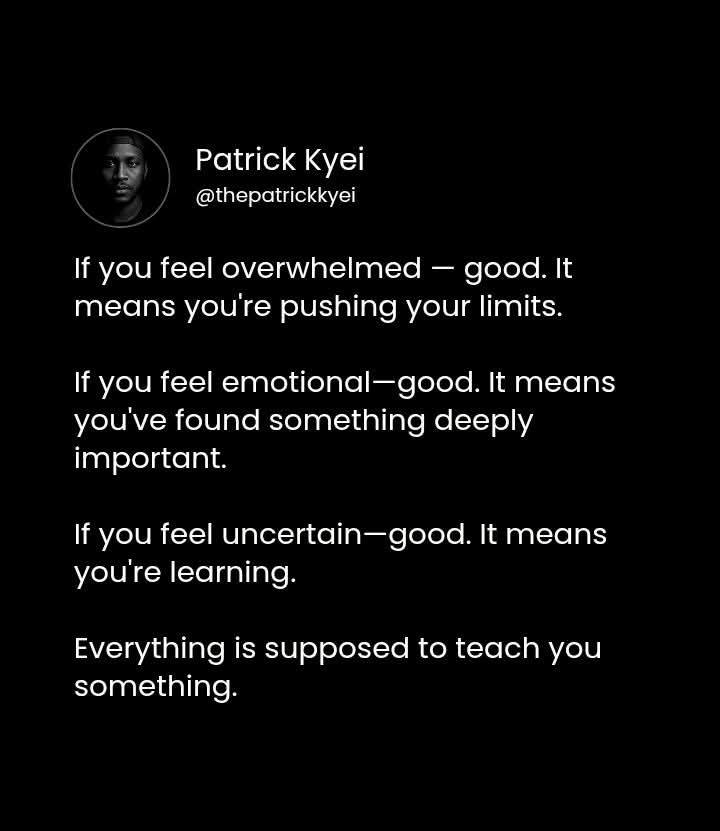
Everything worth building in life is hard.
But here’s what most people don’t realize:
Not all hard things are worth pursuing.
Some types of hard drain your soul.
Others fill you with fire.
Let me explain.
I once worked as a salesman at car spare parts. 10-hour days. Constant hustle.
I met good people. Made decent money. Learned a lot.
But every night, I went home empty. Unfulfilled.
Like I was building someone else’s dream.
And slowly shrinking inside.
Then I made a switch.
I started my own personal brand—the foundation of my one-person business.
I thought it would be easier. It wasn’t.
Client expectations. Late nights.
Unpredictable income.
Constant pressure to deliver or lose it all.
But here’s the difference:
- This hard makes me come alive.
- This hard gives me energy.
- This hard aligns with my purpose.
The stress is real—but so is the fulfillment.
So if you're going to suffer anyway,
Suffer for something that makes you feel proud. Struggle for a path that feels like your own.
Because not every mountain is worth climbing.
Some are just tall walls leading nowhere.
Others lead you home.
Pursuing your interests allows you to build the freedom you desire and the quality of life you need.
The best part is that everything 100% of the skills you develop along the path you choose and what you build becomes your own, and nobody can take that from you.
How To Tind Your Type Of Hard
Just ask yourself this: “What is the thing worth pursuing that will bring fulfillment, freedom, and a sense of purpose to my life?”
If that’s working for someone else, get a job.
If that’s working for yourself, start a business.
There’s no right or wrong, just a choice you have to make now.
I chose my hard (starting a business), and it has changed my life forever:
- I feel better.
- I look better.
- I work 4-6 hours a day.
- I’ve learned valuable skills.
- I have more room for hobbies.
- I’ve built strong positive habits.
- I spend more time with my family.
- I spend more time with my friends.
- I spend more time doing the things I love with the people I love.
- Both the career path and the business path are worth pursuing.
Which one will help you build the life you’ve always dreamed of is solely up to you.
But I'd tell you, the path to entrepreneurship gives you more freedom.
The Path To Entrepreneurship
I am of the mind that everyone is an entrepreneur, as it is in our nature.
A steady paycheck is a useful stepping stone but harsh slave master.
Most people who read the first line would immediately develop a stone-block mind.
Allow me to punch holes in your erroneous belief.
Everyone is an entrepreneur.
How you've been conditioned to make money has hugely impacted how you think about the process of making money.
You think you can only make money by working a job and expecting a paycheck at the end of every month.
If you spend money everyday, should you not explore ways of making money everyday?
Why am I telling you this?
Because I’m tired of people thinking that “business” or “entrepreneurship” is reserved for those with startup capital or a certain personality.
What they don't understand is that traits are programmed. They are trained. They are conditioned. You can develop any trait that you want.
You are probably not an introvert. You are just in a culture that will lead you to think you are an introvert.
There are people out there who have the potential to build amazing things but they are raised to be afraid. They are programmed with limiting self beliefs.
Stop thinking of building an independent source of income for yourself as building a business if that doesn't resonate with you.
Think of it as becoming valuable, packaging up that value, and engaging in value exchange – the action that has been around since the caveman days, not just when the legal requirement became a thing.
Whoever tells you anything different wants to control your potential. Make you a useful worker and become subservient to the higher paradigm.
The difference between an employee and an entrepreneur is control over your potential.
Now here is where it gets interesting.
I hear many people say it was in their DNA, it's their talent, because their family was rich, bla bla bla.
Entrepreneurship is not talent. It's a skill. A combination of skills and everyone can acquire those skills if they put their mind to it.
There are so many others who have succeeded not because they are special or more intelligent than you are, but because they committed to self improvement and put in the work to change their situation.
All the time you're saying to yourself, 'I could do that, but I won't,' — which is just another way of saying that you can't. —Richard P. Feynman
“When people say, “I don’t know what I want,” what they’re really saying is, “I don’t want to do the work it takes to get what I want.” It’s not that you don’t know what you want.
It’s that you know what you don’t want—meaning you know what you want—and are hiding from the pain of reinventing yourself. You are hiding from the slow structural redesign of your identity.” — Purpose And Profit.
- When was the last time you read a business book?
- When was the last time you attended a business seminar?
- When was the last time you listened to a business podcast?
- When was the last time you did something different what you do everyday?
You can complain all you want but If you can spend 8 hours building someone else's dreams, you can spend 1 hour building your own.
Self-improvement is about solving problems in your life.
Business is about solving problems in other people's lives.
Social media, the creator economy, and technology have allowed a singular person to attract and monetize an audience, a distribution channel.
This isn’t a new fad business model, this is the reality of the modern world.
You have the ability to learn anything on the internet, build anything on the internet, and accept payment from anyone on the internet.
And yes, you can start with $0 to your name.
Acquire the skills to solve the problems in your life, which is an automatic filter for value.
Then turn the solution into a product for others.
That's it.
The Business Model For Boomers
Business is simple but most people complicate it.
It only requires two things:
- A product/service
- An audience/distribution
Most people get it wrong. They spend years perfecting a product… but forget to build the customer base.
A product without an audience/distribution is just an idea. An audience without a product is just a following.
To most people, a business is a million dollar startup. They create fancy business ideas in their heads without realizing that business is value exchange. Something that existed even in the caveman days.
If you want to build a real business, do this:
- Build your audience first.
- Sell them something they already want.
No audience, no sales. No sales, no business.
It’s not about what you think is great. It’s about what people are already willing to buy.
Validate Your Idea And Then Build
Start there.
Build both at the same time.
-
Grow an audience: Share valuable insights. Teach what you know. Build trust before you sell.
-
Validate your product: Listen to your audience. Understand their pain points. Create what they actually need.
-
Sell confidently: When you’ve built demand, selling becomes effortless.
Stop being afraid to sell if you know what you offer can help someone.
If you’ve spent years learning something valuable…If you’ve walked through fire to gain hard-won insights…If you’ve built systems that work…You owe it to others to package that value and offer it with conviction.
Sales isn't manipulation. Sales is service—when what you're selling improves someone’s life.
Increase your income by increasing perceived value. Then offer what you believe in.
Start getting more out of life—not by taking more, but by creating more value.
The world pays those who create value.
Most struggling entrepreneurs don’t have a product problem. They have an attention problem.
Build an audience or distribution first, and everything else gets easier.
Audience=distribution.
Distribution=leverage.
Thanks for reading.
-Patrick